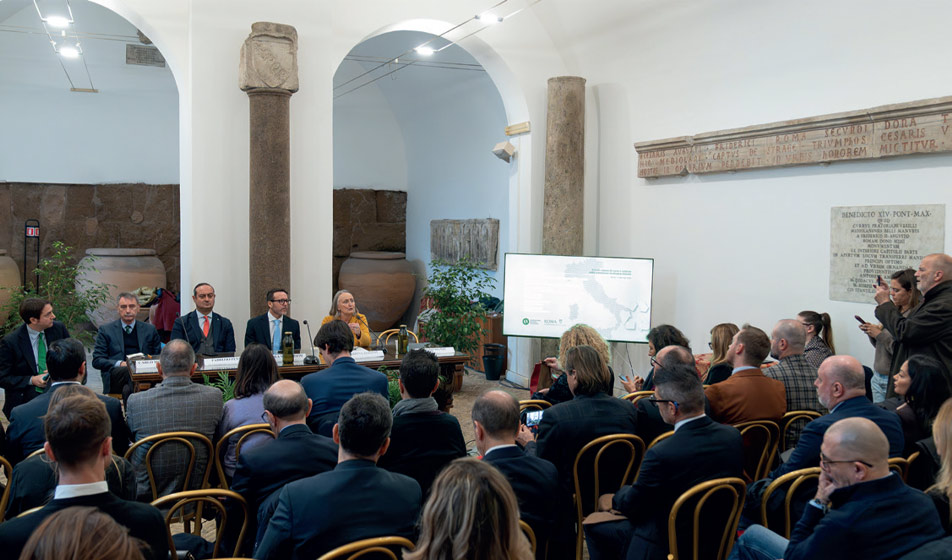
The event organised by Associazione Italiana Scatolifici highlights the boom in e-commerce and the race to personalisation. Corrugated cardboard consolidates its key role in the supply chain
The ACIS conference at the Campidoglio put corrugated cardboard back in its role as a pillar of ecological transition: Italy is the second European producer and in 2024 the recycling rate of cellulosic packaging reached 92.5%, exceeding the EU 2030 targets.
The Ipsos Doxa research (fieldwork November- December 2025) presented on 14 January, however, goes a step further: it measures perceptions and choices along the supply chain and shows where, today, decisions on packaging are really being made.
Consumers: cardboard feels (almost) at home
In the consumer sample (502 interviews), knowledge is extensive: 79% know what corrugated cardboard is and associate it with its protection, strength and packaging functions above all. They experience it frequently too: 53% declare they come into contact with it “often” or “very often”, with a peak for customers aged 25-34 (61%).
E-commerce, replacement and reuse: the long life of a box
E-commerce remains the main driver: 75% of interviewees cite the receiving of parcels from online purchases as the main opportunity for contact (a more marked figure in the North). Over half of respondents (55%) perceive an increase in the use of corrugated cardboard compared to the past, often at the expense of bubble wrap and rigid plastic.
And this kind of packaging does not end up in the bin: reuse is common practice, from domestic storage (61%) to online returns (56%) and shipments of second-hand goods (44%), a sign of how the cardboard box has penetrated the eCommerce flows.
Customer companies: high satisfaction and ramping personalisation
As for user companies (202 interviews), last year purchases of corrugated cardboard grew for 57% of the sample (13% over 10%), while only 8% reported a decline. Satisfaction is transversal and very high: 94% “very/enough”.
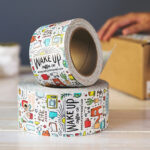
The most dynamic signal concerns personalization: 73% require boxes with logos and graphics and, among these, demand is “increasing” for the 52% of respondents. 82% of companies signal the ability to customise as important and, not surprisingly, corrugated cardboard continues to gain space by replacing packaging paper and flexible plastics (51% each among replaced materials).
Box manufacturers: purchase criteria and competitive pressures
The data from manufacturers (64 interviews) brings us back to the day-by-day. In choosing the supplier, customers are perceived as driven by price (50% “fundamental”), delivery times (50%) and reliability (47%); sustainability and impact on the territory remain in the back. In the choice of packaging itself, price is still first (47%), then protection (34%) followed by customisation (33%). In parallel, the most cited internal challenges are price competition (48%) and finding qualified personnel (45%), followed by environmental sustainability (31%) and product quality (25%).
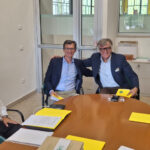
“A competition based exclusively on price subtracts resources from strategic investments in innovation and in the processes of replacing high environmental impact packaging materials with corrugated cardboard solutions. We will continue to collaborate with Institutions to enhance the work done by box manufacturers, support the innovation and growth of the sector and promote a competitive model based on quality, sustainability and value, not only on price”, said Andrea Mecarozzi, President of Associazione Italiana Scatolifici (Italian Box manufacturers Association).
A smarter and lighter tomorrow, with a lot of uncertainty
Looking to the future speaks of “smarter” cardboard: digitalization, connected solutions, co-design, digital printing and greater lightness with the same performance, along with more advanced sustainability. But another relevant message also comes through: a high level of uncertainty, with the future seen more as a continuation of external trends (plastic replacement, industrial concentration) than as a sector-led transformation.
“We are particularly satisfied with the positioning of our association as emerged from this research: it’s a recognition of the work done in these fifteen years and the enhancement path built at all levels, especially institutional.
We have found political interlocutors who are attentive and willing to expand their knowledge of our sector and listen to its needs, as evidenced today by the presence of Fabrizio Penna, Head of the Department of the Mission Unit for the PNRR of the Ministry of the Environment and Energy Security “, says Mecarozzi.