Creasing, cutting and ejection: how to reduce waste and machine downtime when fluting, thickness and production conditions change.
With the growing demand for light corrugated cardboard, short runs and quality graphics, the diecutting process must guarantee clean cuts and repeatable creasing without damaging the fluting. Small variations in thickness, humidity or pressure produce waste, folding defects and machine downtime. In this scenario, we ask companies how they manage control, ejection and creasing to maintain constant productivity and quality, even when the fluting, liner or speed change. Reducing liner breakage and crease burst is crucial for packaging performance. We talked about it with David Camerini, Director of CITO Italia Srl, with whom we made a technical assessment of a market – that of corrugated cardboard – that is of interest for an increasing number of companies.
What are the most frequent critical issues you encounter in the transition from theory (design/ dieline) to machine reality, when it comes to corrugated cardboard creasing?
The main critical issues in my opinion arise when there is poor communication between the diecutting service and the box factory, resulting in the use of incorrect creasing parameters. Failure to adjust height/width, quality of the cardboard, or the use of unsuitable ejection material, all cause creasing defects, aesthetic problems and higher waste volumes.
How to objectively and repeatably verify that the creasing process is “on spot” (before and during production), and which KPIs are most useful to decide on an intervention?
Using measuring devices to check the real conditions, with periodic sample checks (on the pallets before restarting production). Performing random visual inspections and creasing measurement to define specific standards, tolerances and parameters for each flute type (E,B, etc.)
When the goal is to achieve clean-cut edges without visible compressions, what are the main trade-offs in ejection, stripping, and pressure?
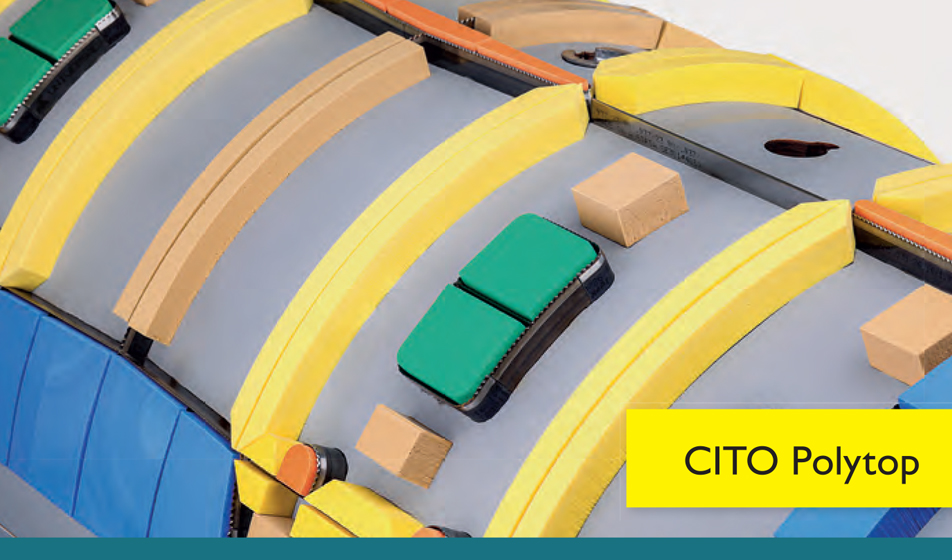
It is essential to guarantee the flatness of the cutting die, correct pressure (with no overpressure), adequate ejection materials and profiles. It is also mandatory to introduce a rubbering standard common to all suppliers, defining priorities between quality, aesthetics and performance.
On thicker or multi-flute cartons, which problems arise most often in creasing (tearing, delamination, “bursting” of the liner) and how do you set up for prevention in the start-up phase?
The key factor is to provide the correct parameters based on thickness of the compressed material, this is the key to success as it allows to establish the right parameters for both the creasing rule and the counter-channel. Finally, the use of dedicated profiles. Ejection material and parameters must be chosen according to the material.
How to differentiate the approach creasing with and against the flute, and what precautions should be taken to ensure a “robust” crease without loss of strength or aesthetic defects?
To ensure a robust crease with and against the flute, it is not so much necessary to choose between directions, but rather the crease must be correctly evaluated and the diecutting side defined. For the print side, a 90/180° parallel crease must be processed with the same settings. A 90° internal die-cut must be narrower than the 180° one otherwise the internal layers would come into contact at 180°. It would also be advisable to standardise creasing parameters according to the different materials to be processed.