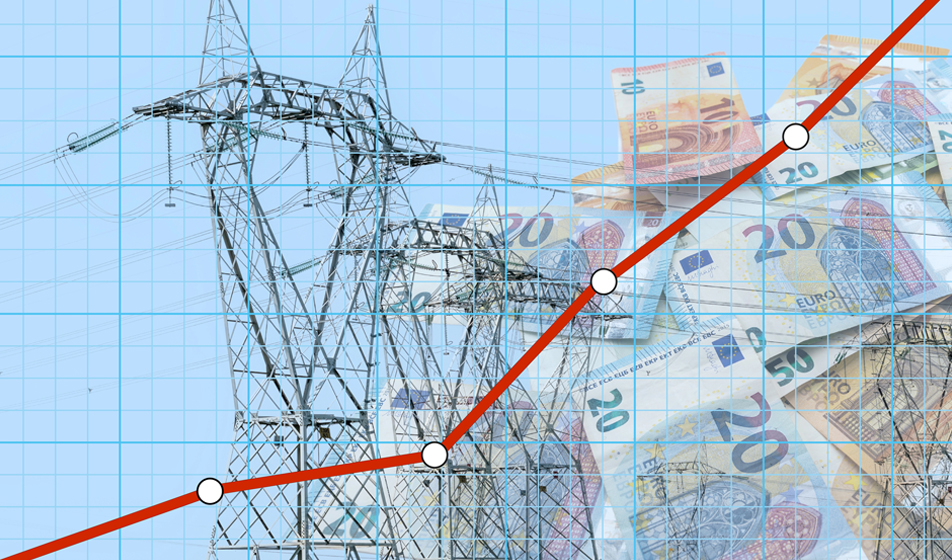
The analysis conducted by I-AER – Institute of Applied Economic Research – on 457 Italian SMEs shows that, in the event of continuous escalation, energy costs could increase by between +30% and +40% over the year.
Rising international tensions are once again putting pressure on energy markets, and the risk for Italian companies is becoming tangible. The most immediate signal comes from oil. Following the escalation involving the United States, Israel and Iran, the Brent – the main benchmark price for oil in Europe – has climbed back above USD 91 per barrel. Driving prices upward is primarily concern over potential disruptions to traffic through the Strait of Hormuz, a strategic corridor through which around 20% of global oil and liquefied natural gas passes. If uncertainty persists, estimates indicate a possible increase beyond USD 100, with knock-on effects for SMEs. And the signs of tension are not limited to fuels. In the first week of March, the PUN (National Single Price) – the benchmark for wholesale electricity prices in Italy – also recorded a sharp increase, with an overall rise of around +29% compared to the previous week. On the gas side, the PSV (Virtual Trading Point) – the main reference for natural gas prices on the Italian market – recorded an increase of approximately +49% in March 2026 compared to the previous month. These are highly significant changes that directly impact corporate balance sheets

Fabio Papa, professore di economia e fondatore di I-AER
In Italian SMEs, transport accounts on average for 6% of costs and energy for around 4%: in total, up to 10% of the cost structure is sensitive to fluctuations in energy markets. In an SME with €10 million in revenue and approximately €9.5 million in total costs, energy and transport typically account for around €800,000 per year. With price increases at the upper end of estimates, this cost item could rise by between €200,000 and €300,000 within a few months, generating an overall increase in company costs of between +2.4 and +3.4 percentage points.
“Increases of this magnitude,” comments Fabio Papa, professor of economics and founder of I-AER, “rapidly compress margins and make logistics and sourcing more expensive and unstable, with persistent effects on profitability and positioning. In sectors where energy is a competitive lever, if costs rise faster than the ability to adjust prices, volatility risks leaving lasting impacts on profitability and market positioning.”
SME Costs: Variations by Sector
The impact varies by sector. In logistics, cost increases are immediately reflected in company accounts. A transport company with around €5 million in revenue and a fleet of 15 vehicles could face an increase in fuel costs exceeding €100,000 per year if diesel prices rise by 20–25%. An increase of this magnitude drastically reduces route profitability and pushes many companies to revise less profitable routes or renegotiate terms with customers.
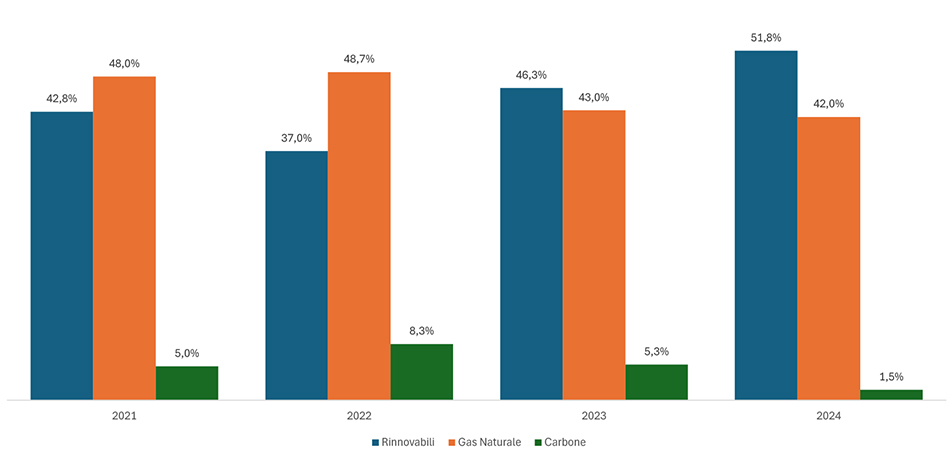
In manufacturing, the pressure is particularly evident: a wood industry company with €10 million in revenue and approximately €400,000 in annual energy costs could see its energy bill increase by more than €150,000, with direct effects on margins as well as production and investment plans. In the metalworking sector, a company with around €12 million in turnover and energy consumption close to €600,000 per year could face increases of between €120,000 and €150,000, further compressing already tight margins. The impact is also significant in the food service sector: a restaurant with €1.5 million in revenue and annual energy costs between €50,000 and €70,000 could see additional increases of €20,000–30,000, resulting in strong pressure on margins. The Italian context amplifies this vulnerability. Although the share of renewables reached 51.8% in 2024, Italy remains dependent on gas for 42% of its energy production. Since a significant share of electricity is generated from natural gas, any international tension tends to quickly translate into higher energy costs for businesses.
“It is only an apparent paradox,” Papa continues. “Renewables are growing, but dependence on gas keeps exposure to volatility high.”
The response of companies
Entrepreneurs are already taking action to protect their balance sheets in a scenario that many describe as increasingly critical. 70% of companies in the sample plan to increase their price lists by between +3% and +5% in the coming weeks in an attempt to absorb at least part of the surge in costs. However, many companies see this measure as only temporary and likely insufficient to offset the impact of rising costs. Interviews reveal a climate of strong concern. 58% of companies have already decided to temporarily halt planned investments for 2026 in order to preserve liquidity, while 46% plan to freeze new hires at least until mid-year.
In the manufacturing sector, the tension is even more evident: 67% of companies are considering reducing production shifts or slowing volumes to avoid operating with excessively compressed margins – a choice that could have direct effects on both employment and production capacity. This is not merely a perception of risk, but a situation that entrepreneurs describe as increasingly concrete: compared to 2025, current order books for the coming months are down between -10% and -15%. A signal indicating that a slowdown in industrial demand is already underway.
Transport Costs for SMEs
Pressure is also particularly strong in transport. 57% of companies have already started renegotiating with carriers to contain rising transport costs, while 80% are acting directly on commercial contracts by increasing transport charges applied to customers or introducing fuel-related adjustments This mechanism risks quickly passing cost increases along the entire production and distribution chain, with potential knock-on effects on final prices and, consequently, on inflation in the coming months.
This overall situation risks generating two critical effects for the system and SME costs The first is a potential slowdown in the real economy: the halt in investments, hiring freezes, and reduction in production volumes are all signs of a business system entering a defensive mode. If these choices persist in the coming months, the risk is a slowdown in business growth and a reduced ability of the industrial base to support economic development. The second concerns price pressure along the entire supply chain If an increasing number of companies begin systematically passing cost increases on to customers and distributors, the result could be a new inflationary push, ultimately reflected in final prices and in consumers’ purchasing power.
“The data shows a widespread defensive response – concludes Fabio Papa – with price increases, a halt to investments and hiring, and reduced volumes. The risk is a rapid slowdown in the real economy, at the core of the SME system.”