The flexible packaging industry is going through a decisive transition towards digitisation, driven by the need to combine extreme production agility with increasingly stringent storage standards. Although traditional mechanical systems still represent a robust solution for standardized mass production
Although traditional mechanical systems still represent a robust solution for standardized mass production, the integration of laser sources has revolutionized the concept of functionality, allowing to calibrate gas exchange (MAP) with micrometric precision and to integrate easy opening systems without compromising the packaging’s protective barrier.
However, the move to “converting 4.0” introduces new operational variables, such as heat stress management (HAZ) and the need for predictive maintenance on optics, which require advanced specialist skills. In this interview with Matteo Maffeis, Sales Manager Flexible Packaging for Sei Laser, we explore the real criteria of convenience between analogue and digital approaches, analysing how the optimisation of machine parameters can transform a technical criticality into a competitive advantage for shelf-life and consumer experience.
For high-breathability products, what are the real limits of pin rollers in maintaining a constant OTR (Oxygen Transmission Rate) compared to the laser’s ability to generate perfectly repeatable 40-100 micron perforations?
MAP technology is now one of the most effective systems for preserving highly perishable food products. Laser micro-perforations are over 5 times smaller than traditional mechanical microperforations. These smaller holes allow for more accurate control of gas exchange, improving the effectiveness of modified atmosphere packaging.
How can ‘laser scoring’ for facilitated openings on laminates (e.g. PET/PE or structures with aluminium) ensure that the barrier layer remains intact while only the outer layer is perforated?
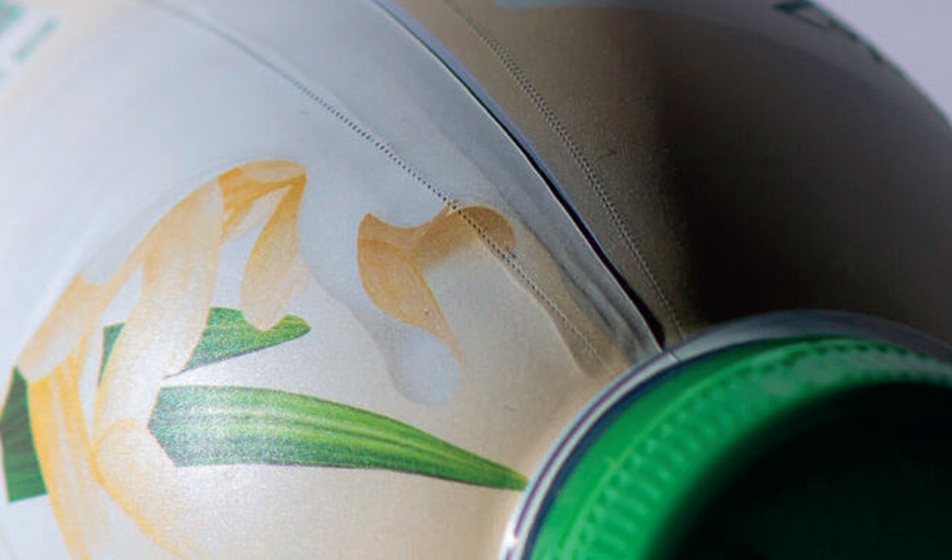
Current high-quality laser systems offer the ability to accurately and uniformly score flexible films at controlled depths. The key to this technology lies in the laser system advanced control software, which constantly monitors and regulates the power of the laser beam to ensure a constant perforation depth even at variable speeds. The score lines are created by vaporizing specific areas of a flexible film, creating a narrow channel in the material that will result in the facilitated opening.
A laser weakens specific layers of a material to produce score lines without compromising the barrier properties of a flexible film. A digital workflow offers versatility and the ability to instantly adapt to different specifications and materials, without the need to replace tools for different jobs.
During the thermal laser scoring process, vaporization and melting of the upper layers of the flexible film occur due to the energy created by the laser beam. The tapering, a V-shaped concavity in the film, is created at the point where the material is vaporized, thus generating the base of a scoring line. The result is a precisely positioned scoring line that tears cleanly each time, offering the end user a practical feature that promotes brand quality.
What are the materials with the best performance in terms of laser cutting?
The most suitable flexible materials for laser processing are those with a narrow liquid-vapor temperature range. These include: polyester, polyethylene, polypropylene, PVDC barrier, polyolefin shrink films, nylon and metallised films. Multilayer laminates are ideal for laser marking, as one layer absorbs the energy of the laser beam for a precise scoring line, while the laser beam passes through the other layer without effect. Different materials absorb energy differently and therefore vaporize at different temperatures.
In mechanical processing, the generation of dust and micro-scraps is a known critical issue for food & pharma applications. How does a laser operator have to manage sublimation fumes and filter system maintenance to prevent volatile debris from settling on the film?
The management of fumes from laser processing is indeed very critical. The risk of contamination of the material is high, so the laser system must provide an adequate smoke and/or waste evacuation system. Without it, laser processing loses meaning, as the final result would not be acceptable.
On ‘Marking on the Fly’ systems, how does the operator correct any geometric distortions of the perforations (from round to oval) that occur when speed increases beyond 300-400 m/min?”
At high speeds, even above 500 m/min, the fact that during the firing of the laser to carry out the micro-perforation the material advances, must be taken into account. As a result, the end result is an oval hole. The degree of ovalization depends on the duration of the shot (and intrinsically on the material type and thickness), and the speed of the material. Laser systems automatically compensates for this ovalization by moving the firing line during the emission itself.
In other words, the laser “chases” the material for the microseconds needed to puncture it. All automatically. The end result is a perfectly circular hole, at any speed. This is an essential prerogative for packaging dedicated to MAP, where the market requires a 10% maximum degree of ovalization. This system, completely transparent to the operator, allows not to make any mistakes.
What feedback technologies (e.g. pulse monitoring sensors or vision cameras) do you recommend integrating so that the operator can instantly notice a missed perforation, a criticality that would compromise the shelf-life of the entire batch?”
A specific camera system can be equipped to control and obtain a final report. The control consists of 3 main phases: checking the number of perforations performed, checking that perforations are complete, and checking the degree of ovalization. This final report allows the converter to objectively certify the laser processing performed.