Amid rising untransferable costs and energy inertia, margin pressure is putting the resilience of the productive fabric to the test.
The geopolitical crisis is once again weighing on the balance sheets of Italian small and medium-sized enterprises. A survey conducted by I-AER – Institute of Applied Economic Research on a sample of 745 SMEs reveals a “double squeeze”: 73% of respondents identify transportation as the fastest-growing cost item, followed by energy at 53%.
As a result, eight companies out of ten have experienced an increase in operating costs of more than 5% over the past three months, while one-third of the sample reports increases exceeding 10%.
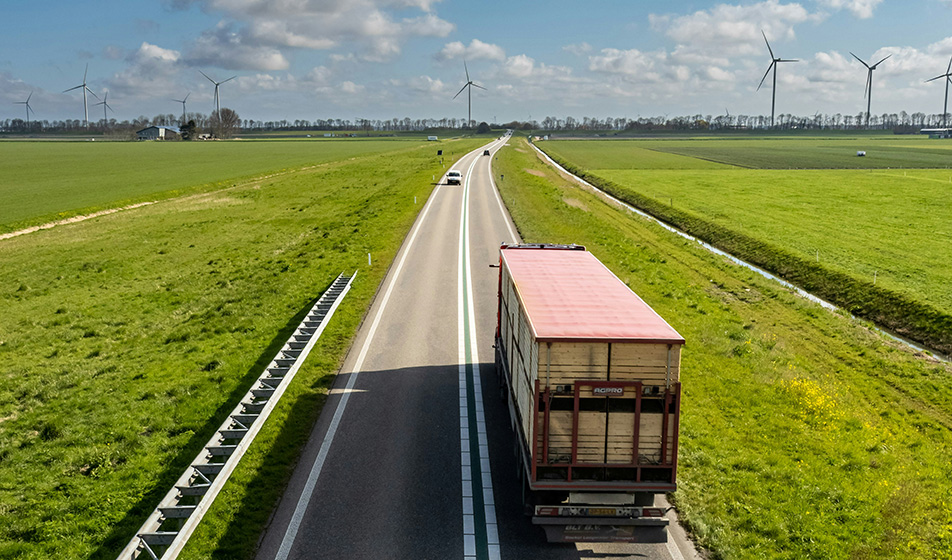
The most critical pressure point is logistics. 73% of SMEs report transportation as representing the most significant cost increase recorded during the quarter, reflecting higher fuel prices and the reconfiguration of trade routes. The burden is concentrated among companies with greater international exposure, with 27% reporting a high dependence on foreign suppliers or export markets.
As Fabio Papa, economist and founder of I-AER, explains: “Transport cost increases are not cyclical; they are a sign of a logistics supply chain that continues to reprice geopolitical risk. For export-oriented SMEs, this means compressed margins in the short term and the need to redesign their cost structure. Companies that fail to address this structurally will end up absorbing these fluctuations at the expense of profitability.”
At the same time, energy is cited by 53% of companies as a rapidly increasing cost, yet the survey highlights a significant disparity in investment levels. While 53% have implemented energy-efficiency measures and 40% have installed photovoltaic systems, another 40% have made no significant investments at all.
The reasons are primarily strategic rather than financial: only 20% identify costs as the main obstacle, while 33% point to limited applicability and 27% do not consider the issue a priority. Against this backdrop, certain manufacturing sectors with high energy and high logistics intensity appear particularly exposed. This is the case for SMEs operating in the printing and converting industries, where printing and drying energy consumption is compounded by a strong dependence on imported raw materials-paper, substrates, inks and chemicals-as well as on transport flows supporting exports of packaging and finished products.
Often supplying major brands and largescale retail chains, these companies also have limited ability to project cost increases downstream. The combination of thin margins, energy-intensive processes and international exposure makes them a particularly effective case study for the “double squeeze” highlighted by the survey.
On this point, Papa stresses: “Energy transition is not only an environmental issue; it is fundamentally a cost management issue. When 40% of SMEs are not investing because they do not consider it a priority or a significant strategy for their business, a substantial share of the productive system is underestimating an exposure that today can account for up to 10% of its cost structure. In the next cycles of volatility, the difference between those who invested and those who did not will be reflected directly in their margins.”
The most alarming finding concerns companies’ ability to react. 47% have been unable to pass on any share of cost increases to their customers, while only 20% of companies managed to pass on the markup to their customers. In a market where 73% report stable or declining demand, operating margins are inevitably coming under pressure, and almost one SME out of two expects their EBITDA to deteriorate by the end of 2026.
Nevertheless, companies are responding through strategic repositioning: 60% are investing in operational efficiency, 62% are seeking new markets, and 47% have
launched supplier renegotiation initiatives.
“Italian SMEs”, Papa concludes, “are absorbing a structural pressure that the market no longer allows them to pass downstream. Those who continue to rely solely on price lists as a defensive strategy will see their margins erode; those who use this phase to address costs, market diversification and energy efficiency will build a lasting competitive advantage. This is not the time for tactical choices-it is the time for strategic decisions.”