Free thoughts on technology and service gathered through hundreds of formal and informal interviews with users, operators and entrepreneurs in the converting sector during my first 3 years at Windmöller & Hölscher. Fabio Gonzatto, Area Sales Manager, Marketing Developer et al. W&H Italiana.
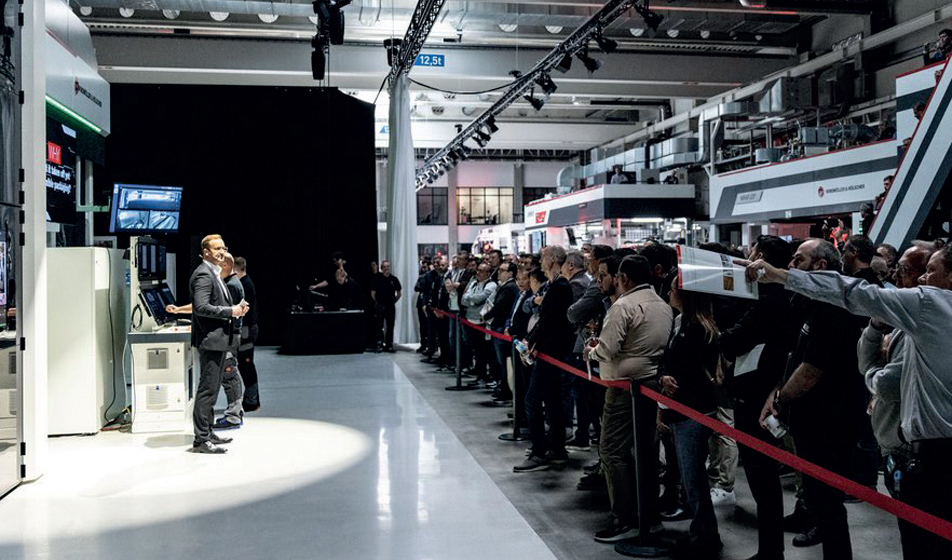
Over the last three years, working in the sales department of Windmöller & Hölscher, I have had the opportunity to listen, talk to, interact with hundreds of customers, operators, technicians, printing and converting entrepreneurs.The visits to the companies and the countless informal conversations on the phone, down the aisles of the facilities, during technical and post-installation meetings… have greatly enriched my way of seeing the Italian market. This vision was confirmed during the last K fair where, for the first time, we recorded the real attendance of visitors to the stand: an average of 900 people a day. They conveyed to us with great clarity what they think of W&H machines and technologies.Not always with good reason.
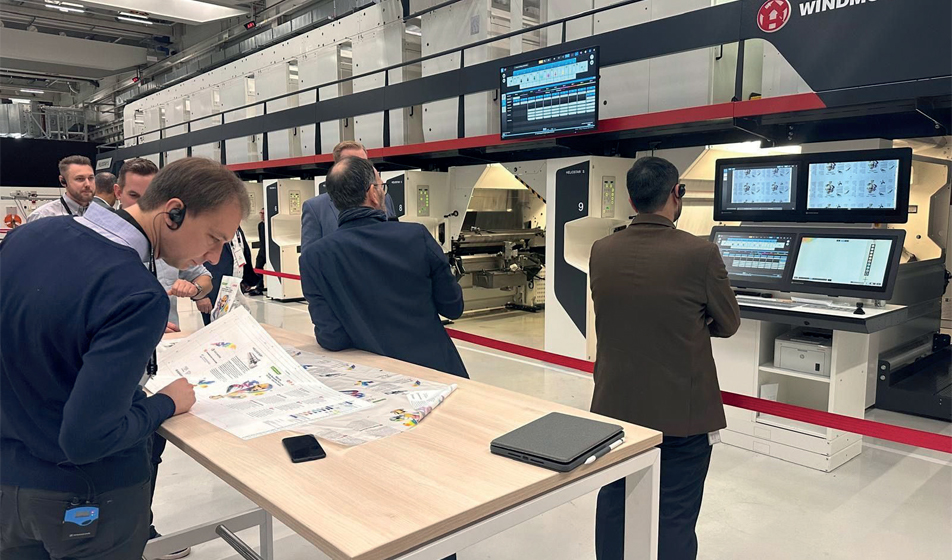
1. “W&H machines are too complicated to handle”
This is a widespread belief, often based on the fact that W&H is synonymous with high technology. But the two do not have to go together and, in fact, reality is very different. Our designers have worked hard to simplify human-machine interaction, for example by developing the EasySetup software, born on the Alphaflex line and now extended to other platforms. EasySetup guides the operator step-by-step during job changeover and start-up, reducing errors, variability and setup times. In parallel other features have evolved: touch interfaces, predictive diagnostics systems, advanced remote assistance, maintenance wizards, overall ergonomics… The result? A sophisticated but also extraordinarily intuitive machine.
2. “W&H machines cost too much and are not within my reach”
W&H remains a top class brand but in recent years has introduced more accessible configurations, without compromising on quality, stability or precision. That said, the Italian market still tends to focus on initial costs and less on total operating costs, losing sight of many relevant elements. The ROI analysis depends on many factors – chosen technology, chosen configuration, materials, volumes, level of automation – but what emerges from a correct analysis is that often the price differential is recovered on average in 3–5 years. We owe this to reduced waste (not only during start-up) and non-compliance, higher uptime, lower consumption, greater operational stability, improved safety and ergonomics, and faster service support: all of which directly affect the competitiveness of the plant.
3. ‘A German company will never customise the machine to my needs’
This is a classic prejudice, historically founded but now overcome by a more complex reality. The idea that every modification must be technically sustainable, safe and repeatable over time to ensure constant reliability over decades is typical of central and northern Europe and tends towards standardisation. However, taking note of user needs, W&H has become very open to customisation requests, especially when there is a clear and shared technical rationale, modifications that can be carried out in a perfect manner, with guaranteed performance and without compromising the robustness of the system. Many configurations created by W&H in Italy are proof of this.
4. Designers do not understand the needs of those who work on the machine every day
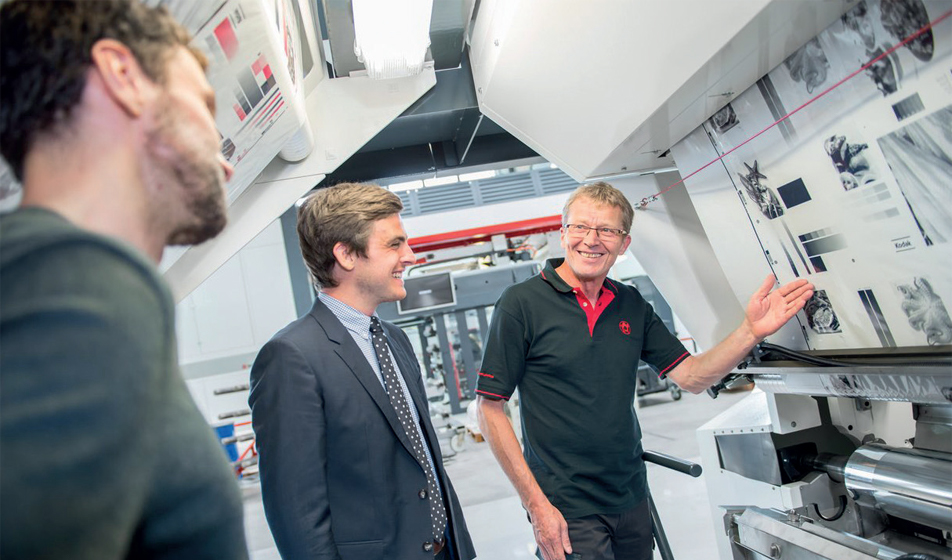
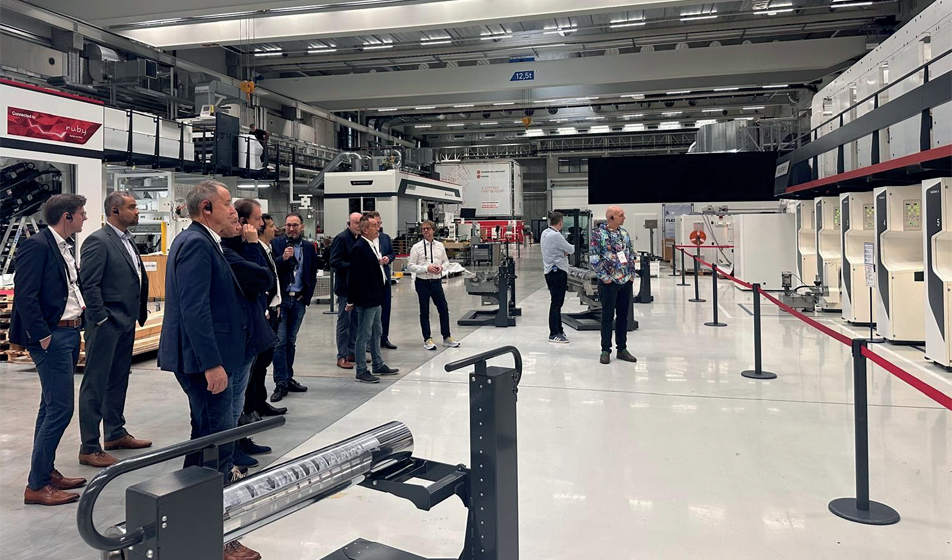
Another obvious example of ‘“non-truth”. For W&H, the relationship with operators is a structural part of innovation. Our Demo Centre is a real development Lab, not just a showroom. Experienced operators and printers work there, testing new software and hardware modules, validating materials, supporting customers and OEMs in training, collecting operational feedback that goes directly back to R&D, collaborating with suppliers of inks, aniloxes, clichés, barrier materials… The Demo Centre is always open and represents a meeting point between those who print, those who design and those who develop complementary technologies. It is precisely this triangulation that has accelerated innovation in printing and converting technologies in recent years. And not only in flexography.
5. ‘I prefer local service: a response or replacement part cannot arrive immediately from Germany… And besides, I don’t speak English.’
Direct relationships are deeply rooted in Italian culture. In recent years, W&H has therefore strengthened its service in our country with figures dedicated to printing, supported by an international team that works in synergy, reducing the cultural and linguistic gap and aligning perceived and delivered quality. And then… in the age of AI, are we still afraid of ‘I don’t speak English’? Today, we have free real-time translation tools that eliminate any language barriers, and W&H also provides a visual assistance tool that can support customers without communication limitations! How? Spare parts? We have a multi-million euro spare parts warehouse, which ensures immediate availability and overnight shipping for fast and organised management of technical issues.