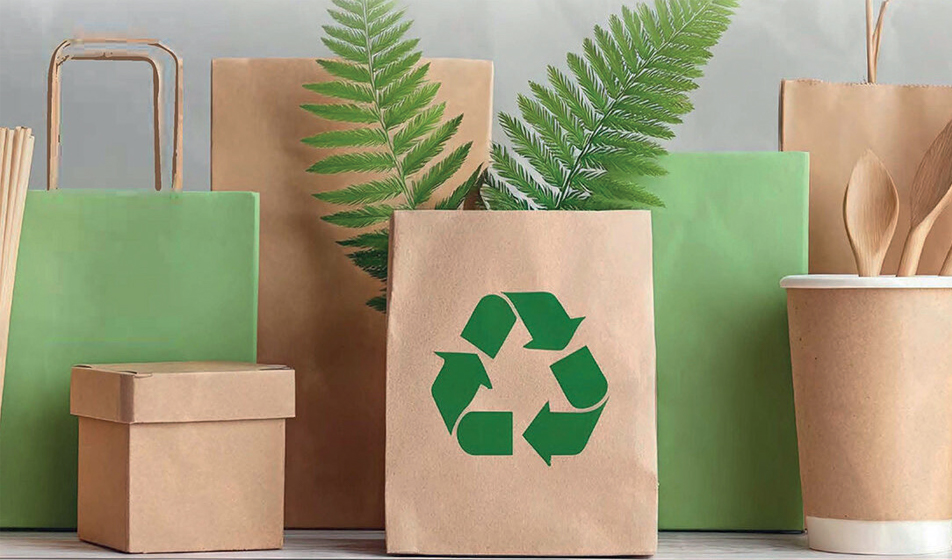
The European Packaging Regulation shifts the focus of sustainability from waste management to planning: recyclability, recycled content, reuse, and material reduction become decisive criteria for business competitiveness.
With European Regulation 2025/40, better known as the PPWR, packaging is no longer just a matter of end-of-life management but becomes a matter of industrial design, compliance, and competitive strategy. The new European framework on packaging and packaging waste was created to overcome the fragmentation of national regulations and introduce common rules across the Union. The goal is clear: to reduce the environmental impact of packaging, limit excess packaging, increase recyclability and reuse, and foster a stronger market for secondary raw materials. For businesses, this means taking action at the source, rethinking materials, formats, weights, volumes, and environmental performance.
From compliance to design
The PPWR applies to all packaging, regardless of material or context of use, and also covers all packaging waste generated by industry, distribution, offices, services, and households. The watershed date is August 12, 2026, when the Regulation takes effect.
From that point on, only packaging that complies with the prescribed requirements are permitted on the European market. Among the first operational priorities are restrictions on substances contained in packaging – including limits on PFAS in food-contact packaging – and the requirement to demonstrate compliance through technical documentation and declarations consistent with the Regulation’s annexes.
Recyclability, recycled content, and minimization
The core of the PPWR is prevention. Starting in 2030, all packaging must be designed for recycling according to criteria and performance classes to be defined by the European Commission; by 2035, it must also be collected, sorted, and recycled on a large scale; by 2038, only packaging belonging to the highest recyclability classes may remain on the market.
For plastic packaging, minimum percentages of recycled content from postconsumer waste also come into play, with differentiated targets between 2030 and 2040.
No less important is minimization: weight and volume must be limited to what is necessary to ensure the product’s functionality and protection, while for multipackaging, transport, and e-commerce, empty space may not exceed 50%.
Reuse, refill, and labeling
The Regulation also introduces a strong push toward reuse and refill, with progressive obligations for specific categories of operators and sectors.
In transportation, distribution, and the Ho.Re.Ca. sector, a phase of major revision of logistics and business models will begin: it will not be enough to choose technically reusable packaging; it will be necessary to integrate it into an effective, traceable, and organized reuse system.
At the same time, labeling will become a harmonized tool at the European level to facilitate separate collection and properly inform consumers. Here too, the direction is clear: less ambiguity, more standardization, and greater responsibility throughout the supply chain.
An industrial challenge, not just a regulatory one
For Italian companies, the PPWR represents a complex challenge, but also an opportunity to strengthen competitiveness and environmental reputation. Compliance requires audits of existing packaging, dialogue with suppliers, material testing, a review of specifications, and an internal roadmap capable of connecting technical, quality, procurement, marketing, and sustainability departments.
Those who act proactively will be able to mitigate the risk of non-compliance, reduce waste and costs in the medium term, and transform the regulatory requirement into a driver of innovation.
European packaging is thus entering a new era: it will no longer be enough to simply “contain” a product; it must demonstrate that it is designed for a more circular, measurable, and responsible supply chain