Matter matters. Today more than ever. When, during my training sessions, I talk to young people about the importance of print communication, they often look at me as if I were talking about something from the past. In the digital age, talking about paper, ink and physical media can seem almost anachronistic.
And yet, all it takes is to invite them to touch a surface, feel its texture, and observe how it reacts to light, to remind them that communication also involves senses that a screen cannot replicate. Physical materials communicate. And they have never stopped doing so.
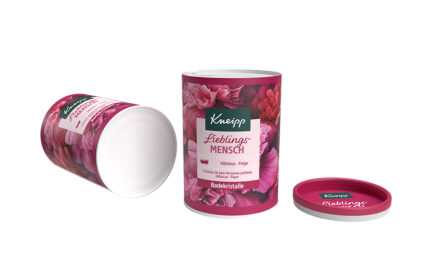
In packaging, this concept takes on an even deeper meaning. This is because packaging must not only communicate, but also protect, preserve, transport and, increasingly, ensure a sustainable end-of-life.
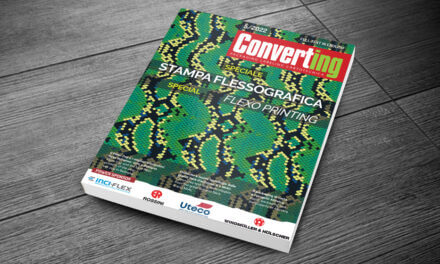
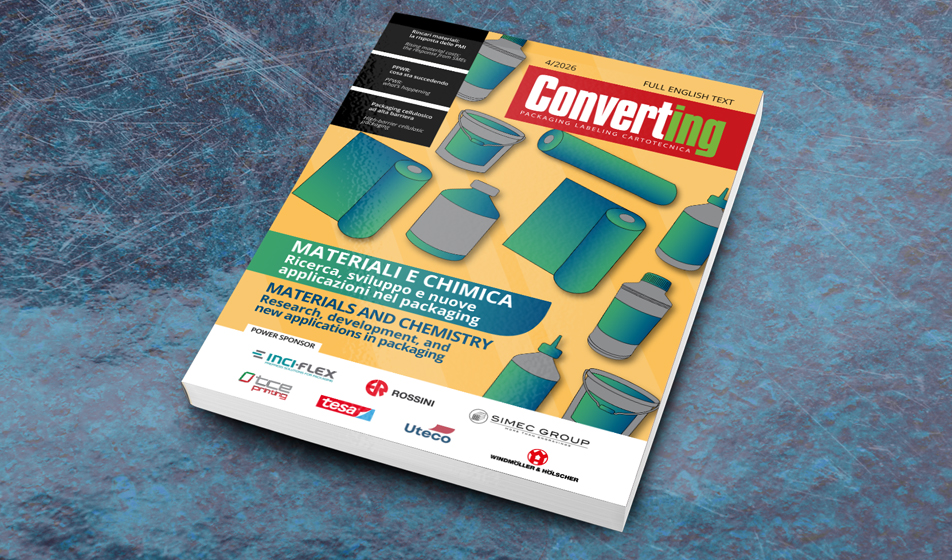
It is from this realisation that the issue you are holding has emerged. A journey through the evolution of materials, where paper and film become engineered structures, whilst coatings, varnishes, inks and adhesives take on new functions, and research aims to achieve greater performance whilst using fewer resources. This is borne out by industrial experience, university studies on functional barriers and reflections on the challenges introduced by the PPWR.
But another factor also emerges: innovation does not arise solely in laboratories. It arises from listening to the market.
The surveys we are conducting, focusing on sustainable materials, narrow web printing and anilox rolls, demonstrate that the supply chain seeks to understand changes before tackling them, transforming data, needs and challenges into opportunities for development.
Because the future of converting will not simply hinge on the choice of an alternative material, but on the ability to design better, measurable and industrially sustainable solutions.
And perhaps this is precisely what I would like to convey to my students: printing does not belong to the past. It is a technology that continues to reinvent the medium, shaping the future.