Dialogue, expertise and experimentation are the keys to transforming pre-press into a corporate asset that enhances every single print job
Having in-house prepress offers a clear advantage: it allows companies to build a tailor-made workflow, aligning file and matrix management with the actual status of the printing presses. When – as would be desirable – dialogue between prepress and printing is continuous and concrete, it becomes easier to make output predictable and define clear and realistic expectations. The other side of the coin is the risk of becoming too “verticalised” on internal needs, remaining tied to methods that evolve more slowly than the market.
In this sense, an external prepress can increase its know-how through comparison with multiple printers and different processes. However, this limitation can be overcome with an open attitude: experimentation and comparison with the sector. For Francesco Maria Costanzo, Flexo Prepress & Press Manager at Poplast, it is precisely these two elements that make the difference in the technical growth of a professional.
Francesco, you have had the opportunity to work on both systems: how do you approach rotogravure and flexography?
I am not a “fan” of any particular technology. There is no single best solution: there are different potentials, which must be exploited according to the customer’s requirements. It is often the client who sets the direction, even if only through their expectations of the final result. The choice between rotogravure and flexography does not always depend on economic considerations: it often arises from technical assessments of colour, ink coverage and the use of special materials or finishes, which make one process more suitable than the other.
Speaking of workflow, can you tell us what the typical scenarios are?
The ideal scenario, for me, is to work with native RGB files: this allows for greater margins of reproduction and optimisation. If, on the other hand, the file arrives already “closed” and balanced, it is often necessary to accept a compromise and manage it in the most intelligent way possible. In general, there are two approaches: conservative or improving. In the first case, we start with what we receive and aim to reproduce the result faithfully, respecting the available instructions: for example, we try to maintain the rendering of a job created in rotogravure when we transfer it to flexo, and vice versa.
In the second case, we engage in a discussion with the client and explain the benefits that can be obtained by enhancing the characteristics of the machine and the process: for example, better emphasising the highlights on a particular rotogravure graphic, or optimising the ink coverage according to the substrate. Sometimes the decision is also internal: knowing our technologies well, we can assess whether the conditions are right to move production from flexography to rotogravure (or vice versa), achieving a more consistent overall result.
What are the risks involved in this change?
Rather than risks, I would talk about informed choices. If you really know the subject, the risk is “calculated” and is not limited to the numbers returned by the software. Printing is also about perception: there is a visual and qualitative component that algorithms alone cannot always capture. And that is often where the difference between a correct print and a print that is truly appreciated by the customer lies.
What technical aspects need to be kept under control?
Some aspects are shared, others depend on the mechanics and specific behaviour of each technology. Trapping, and its management in files, is one of the points that changes significantly between rotogravure and flexography. Even colour coverage, which is generally higher in rotogravure, should prompt advanced pre-press to make targeted assessments and, when necessary, intervene on the files.
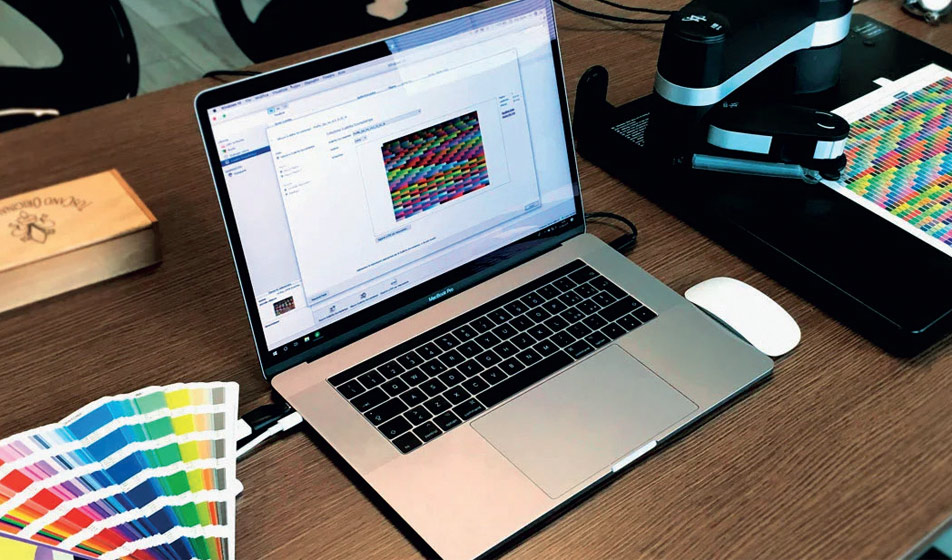
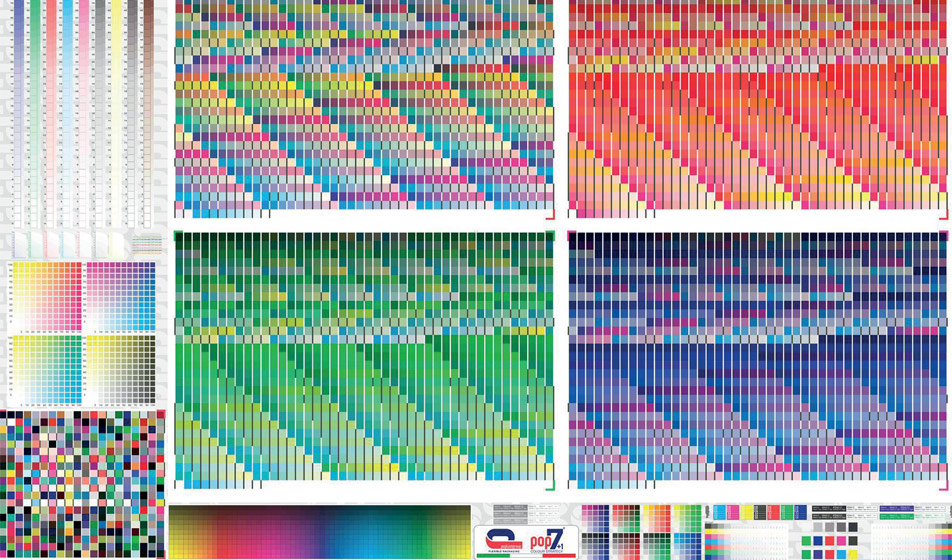
Then there is the issue of inks: in our case, the choice is made internally, which leads us to specific processes, including the management of conversions and profiles. The goal is to work in a predictive way, thanks to, among other things, the colour tests that we carry out internally.
Speaking of colour and tests, how do you comply with your customers’ propositions?
A colour test, even when certified, is still a digital print: it can have limits related to stability over time, sensitivity to light and possible colour deterioration. For this reason, any evaluation must be done carefully, holding different elements together: the test, the information contained in the files, the consistency between what is provided and what is shown, and above all the visual perception. In other words, colour tests should not be read as a “living print” identical to the production result: it is a useful tool, but it requires competence to be interpreted correctly.
Digital technology and management perspectives: what do you think are the best strategies to ensure quality prints on any system?
Here I see two main directions. The first is that digital is now being used on runs that in the past were almost exclusive prerogative of analogue systems. In this scenario, the approach to file conversion and prepress management, in my opinion, remains essentially the same: we must continue to oversee the technical aspects that allow a conservative or improved result, depending on the objective.
The second direction concerns heptachromia, which we are applying with great satisfaction: it offers management advantages that, in many cases, we would not have obtained by resorting to spot colour. And this goal is made possible by three clear levers: continuous technical improvement, experimentation and constant internal dialogue between printing and pre-press.